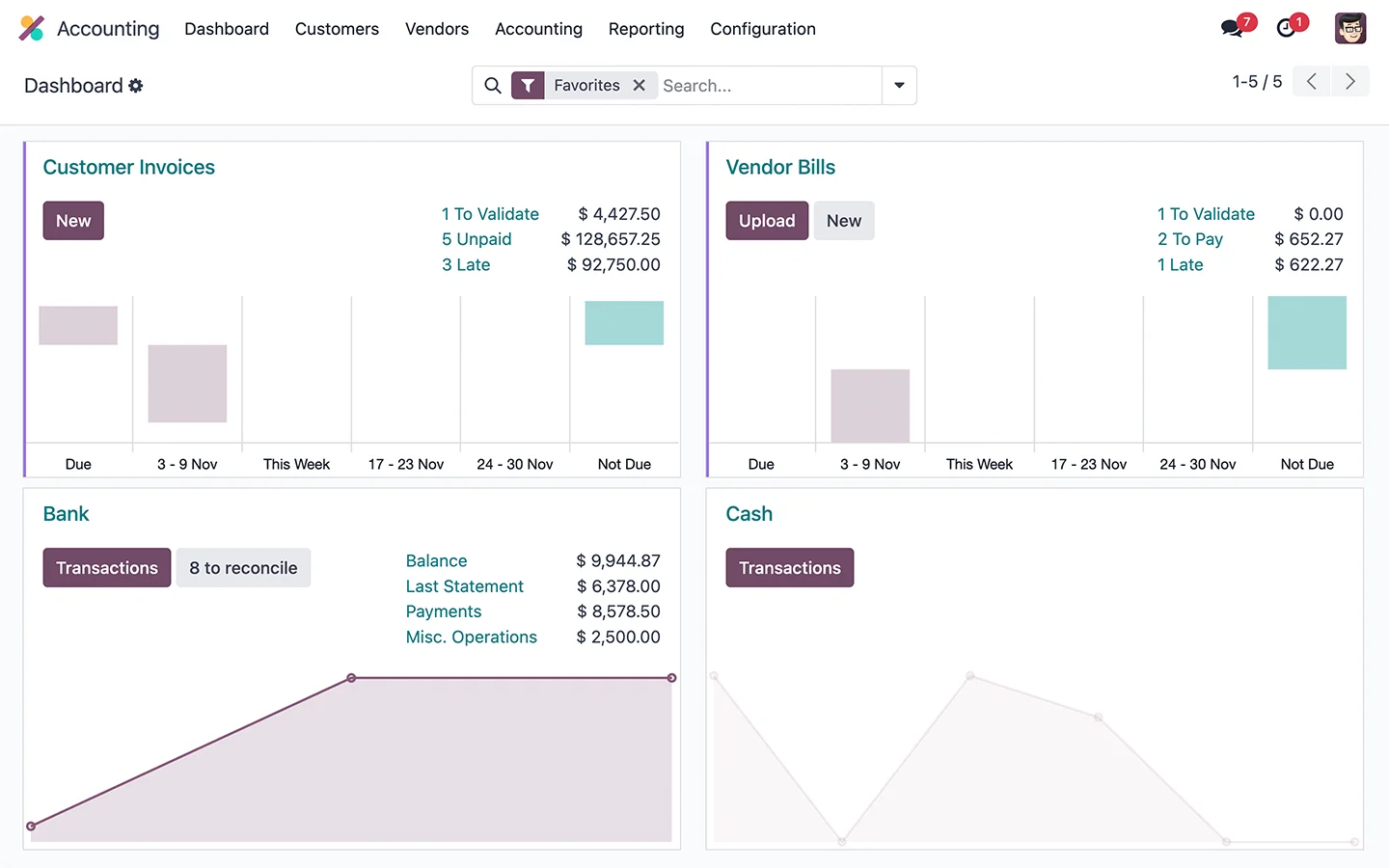
Tri-Comp's invoices come from four different places — recurring maintenance contracts, out-of-scope support hours, hardware supply, and project milestones. In Odoo they all post themselves to the right account at 9% GST, bank statements reconcile against them automatically, and the invoice data can be transmitted to IRAS over the InvoiceNow network the moment Tri-Comp is ready.
The single biggest cost of running finance on a separate package is that everything gets typed twice — once where the work happened, once where the money is recorded. Odoo removes the second time.
IRAS is phasing in a requirement for all GST-registered businesses to transmit invoice data to IRAS through InvoiceNow — Singapore's Peppol-based e-invoicing network. Existing GST-registered businesses are being brought in by turnover band, and IRAS said it would notify businesses registered before 2026 of their individual date by mid-2026.
Schedule as published by IRAS on its GST InvoiceNow Requirement page. Bands are based on total annual supplies in accounting periods ending in calendar year 2025. Tri-Comp's own date depends on its turnover band — TechNext will confirm it during scoping rather than assume it.
TechNext configures Odoo's Singapore localisation and connects Tri-Comp to an accredited Access Point, so structured e-invoices go out over InvoiceNow instead of as PDF attachments.
Businesses can activate IRAS transmission before their mandatory date. Doing it during a planned Odoo rollout is far cheaper than doing it under a deadline.
Compliance happens in the background. Engineers keep closing tickets and site visits; the e-invoice is generated, validated and transmitted without them seeing it.
Each of Tri-Comp's income types reaches the books by a different route — and in Odoo each route ends in a correctly coded, GST-applied journal entry without a human deciding where it goes.
Subscriptions raise the recurring invoice on the billing date, coded to maintenance-contract income, GST applied, sent to the client automatically.
Timesheet hours that fall outside a contract's entitlement become invoice lines at the agreed rate — so work that used to be absorbed gets billed.
Delivering a switch, NVR or handset creates the invoice from the delivery, at the cost recorded in inventory — so margin is right, not estimated.
Cloud migrations and office relocations invoice on milestone completion, with progress and remaining budget visible before the bill is raised.
Distributor invoices, cloud licence bills, telco charges — forward the PDF to Odoo and its AI reads the supplier, date, amount and tax, matches it to the purchase order, and queues it for approval. Bank statements then reconcile against invoices and bills largely on their own.
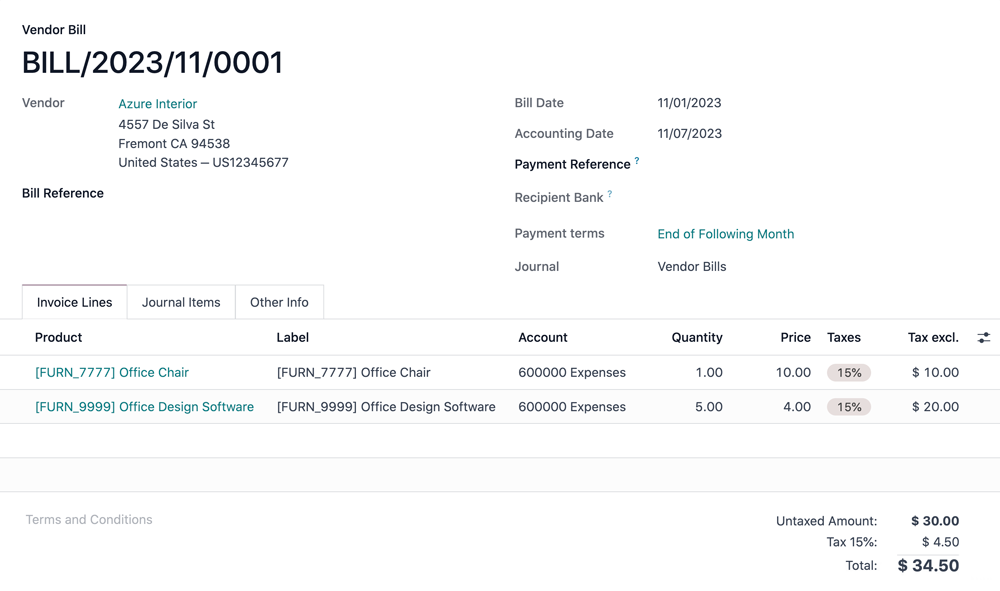
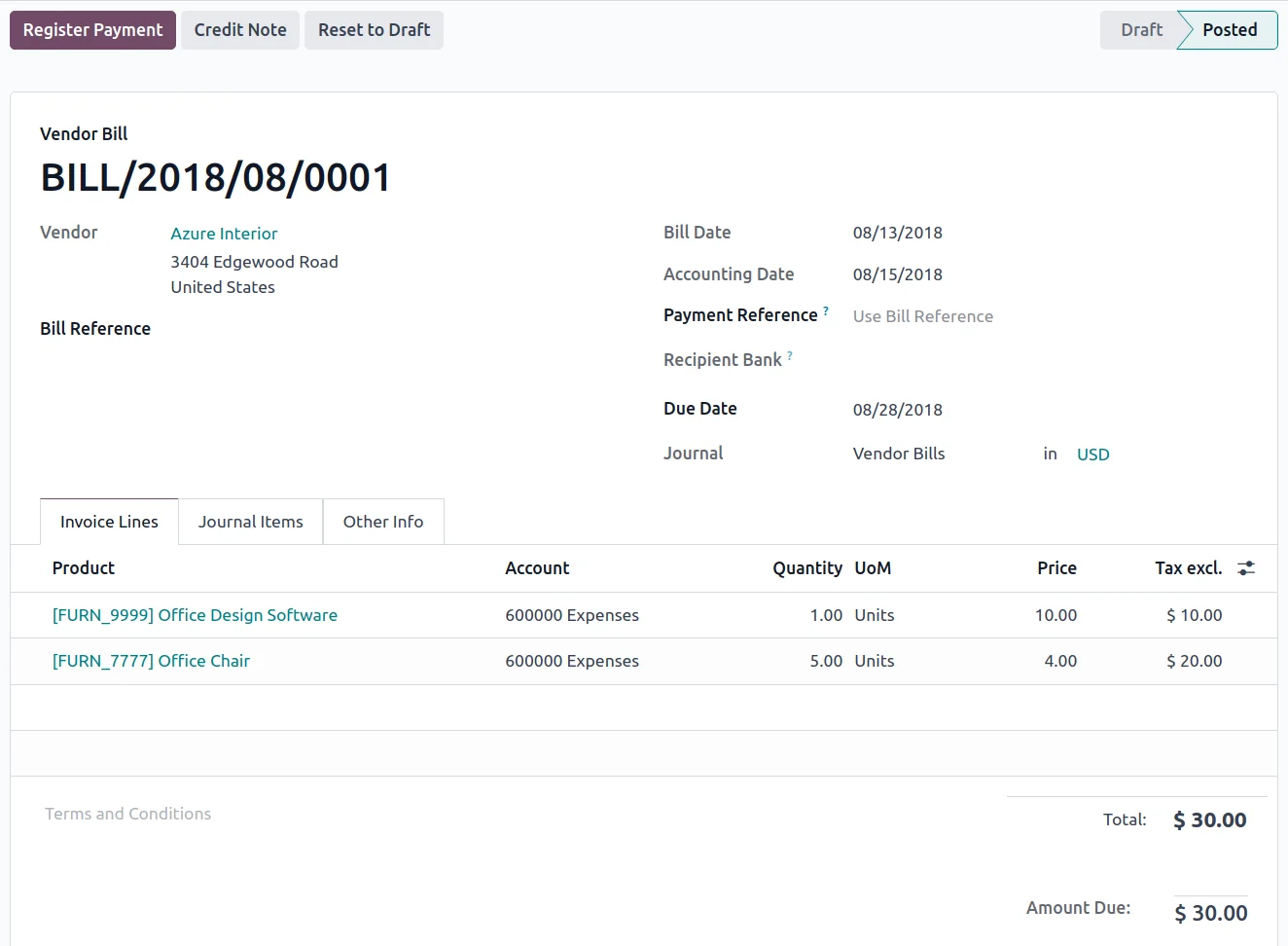
Email or drop in a supplier PDF and Odoo extracts the fields, attaching the original document to the entry for audit.
Purchase order, goods received and supplier bill are compared. Discrepancies are flagged instead of paid.
Statements import automatically and the majority of lines match to the right invoice or bill without intervention.
The GST return is prepared from the ledger, with a drill-down to every transaction behind each box — no quarterly spreadsheet exercise.
Odoo sends payment reminders on a schedule Tri-Comp sets, so cash collection stops depending on someone finding time.
Every entry links back to the ticket, contract, delivery or project that caused it, with the source document attached.
TechNext sets up the Singapore chart of accounts, GST tax codes and reporting, InvoiceNow transmission, multi-currency for overseas licence purchases, and the client-facing documents that carry Tri-Comp's UEN and registered address. It is the unglamorous half of a rollout, and it is the half that causes problems when it's skipped.